Three FPGA Machines and a Kitchen Table
 By Dukuu
· 5 min read
By Dukuu
· 5 min read
It is so cool to be back! Right now, I am sitting at my kitchen table which I have re-dedicated to be the base of what I call the Rebound Retro Lab. Two 27" monitors in front of me, one connected to my Macbook running my (self-built) markdown writing application, which I use to type this article. The other one happily displaying AmigaOS 3.2.3, provided by the beautiful Apollo A6000 and playing some web radio station in AmigaAMP.
Furthermore, the MEGA65 and the C64 Ultimate Founder's Edition are also connected to that second display via a tiny HDMI input switching device. Three FPGA retro machines connected to a modern monitor, which is actually capable of displaying buttery smooth graphics. This is not true for all modern monitors, I learned that the hard way. Even an expensive 4K display is not guaranteed to draw smooth animations.
The culprit here is the 50Hz output from those machines, which needs to be natively supported by the monitor, otherwise you either need to have a strong resistance against micro stuttering or games become simply unplayable. And if there is no support for 4:3 display ratio either, you end up with a horizontally stretched stutter fest.
That was one of the early lessons I learned in the lab. And that is the lab's why anyways. I want to (re-)learn everything that excites me about the technology, that once got me into software development – my today's profession. One could also say the root of all evil ;)
Back To The Future
"You are talking about modern displays and FPGA re-imaginations, but where is the real stuff?"
That's a very good question! I was close to buying a real C64 about a year ago, when my interest in retro computing was rising. Then I realised very quickly, that just buying the machine is not enough. I also need a floppy drive and a monitor. So I did more research and quickly came across some less exciting topics. The old power supplies are notoriously dangerous, the 1541 floppy drives usually suffer from perished belts and head alignment drifting out of spec, and more of such demotivating things popped up. The big problem here: I am a software guy with little to no knowledge about how to repair old computers. Not very promising.
The C64 Ultimate
Then the unthinkable has happened. A YouTuber named Perifractic aka Christian Simpson bought the leftovers of Commodore and announced the C64 Ultimate. I knew the guy from watching the videos on his channel (Retro Recipes) for a couple of years and therefore was confident, that this isn't a scam. I got so excited, I preordered the C64 Ultimate Founder's Edition right from the start.
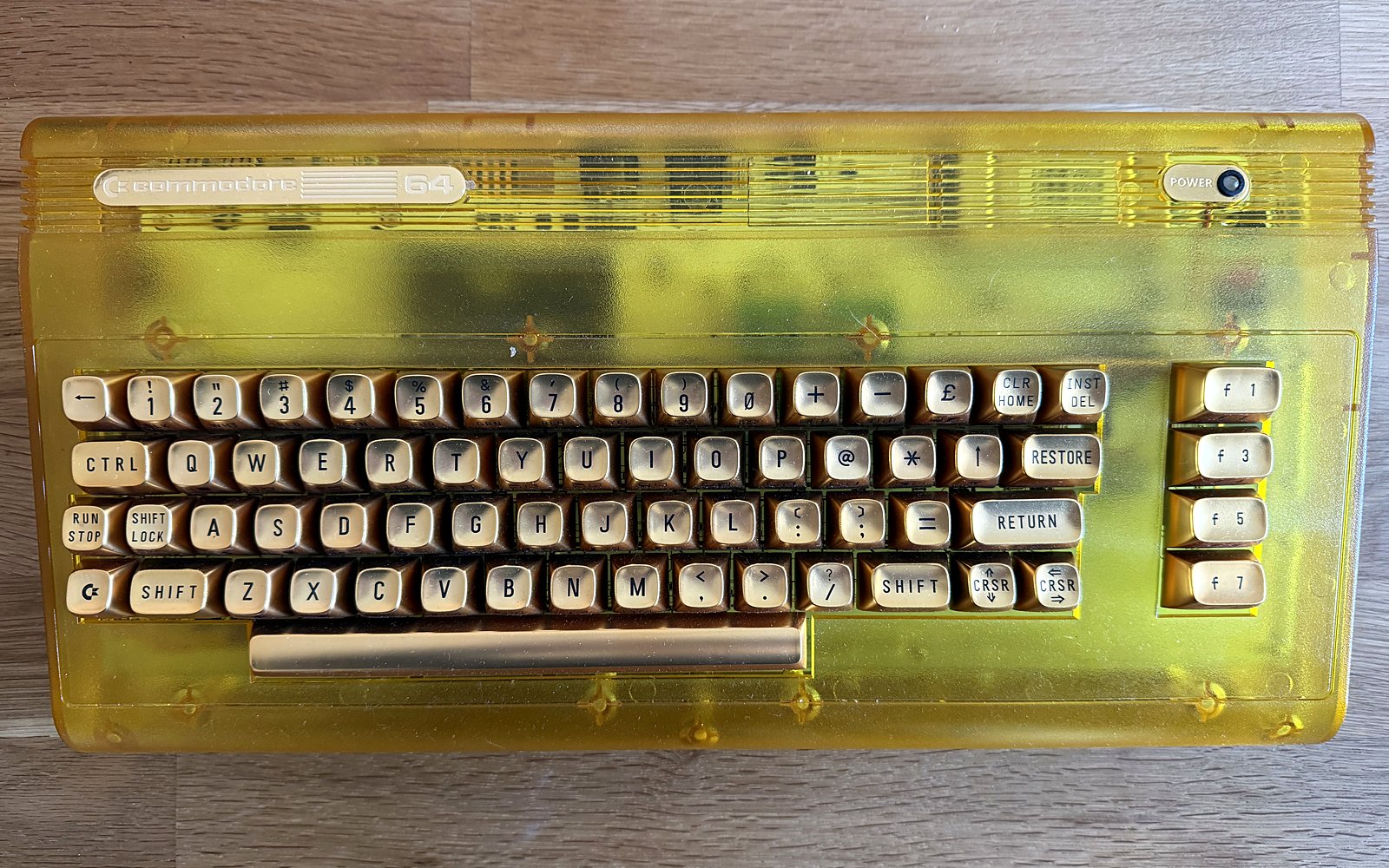
But it would take months until I could eventually unbox and enjoy it. So I did more research. Essentially watching hours of retro computing related videos, reading through several blogs and articles and playing around with several emulators, like VICE and Amiberry.
The MEGA65
At some point I stumbled over a particularly interesting machine: the MEGA65. That one is supposed to answer the question, how the never-released Commodore C65 would have been like. Mind blowing. Those guys essentially finished Commodore's work on that machine. And you can buy it! I'd suggest just do it – I did and I am so glad I did it :) ...it is expensive though, but a real (unfinished) C65 is at about $20,000. So, at roughly 1/20th of that price, the MEGA65 is essentially a steal.
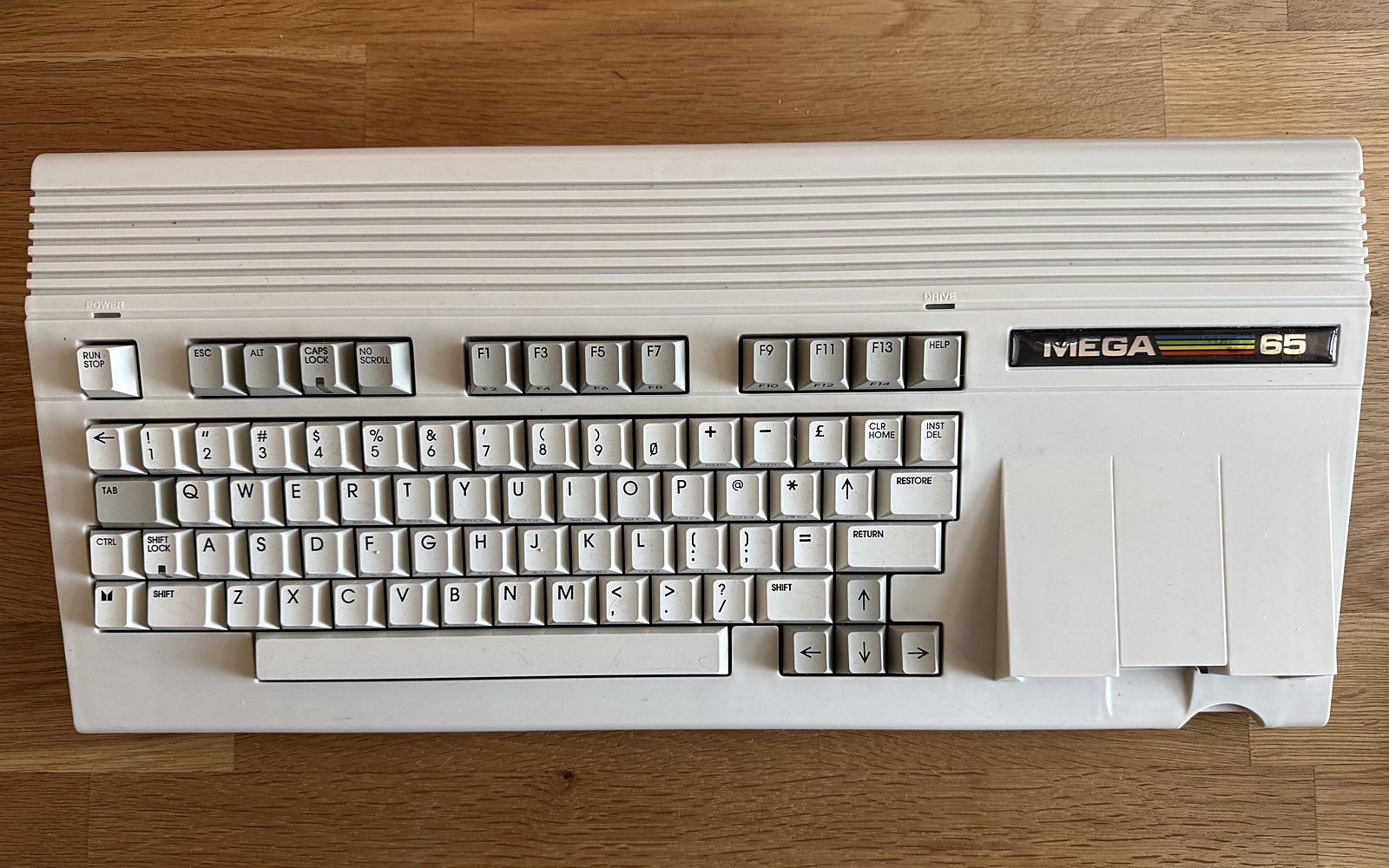
The MEGA65 arrived within a few weeks, so this was my very first retro computer in 2025. It was (and still is) so much fun exploring that machine and with that very capable C64 core that came out for it, it was also 99,5% a C64. I tested a lot of C64 games on it and also got Turbo Macro Pro running there, doing my first steps in 6502 assembly.
The Amiga aka Apollo A6000
One thing was still missing for a complete and satisfying comeback of the good old days for me. I spent countless hours in a warehouse store hacking on a C64 which I couldn't afford to buy. A year later my beloved auntie was willing to buy me a C64, but at that time, the Amiga had already become the machine to have. So I asked for an Amiga 500 instead, which then became the first computer I owned.
"If there would only be something like an FPGA Amiga, too!"
Oh yes, there is! It is also called Vampire sometimes, engineered by the good people over at Apollo. And they had just released the Apollo A6000, exactly what I was searching for and much more even! This is like the Amiga never died, it just took a while for the technical evolution to happen.
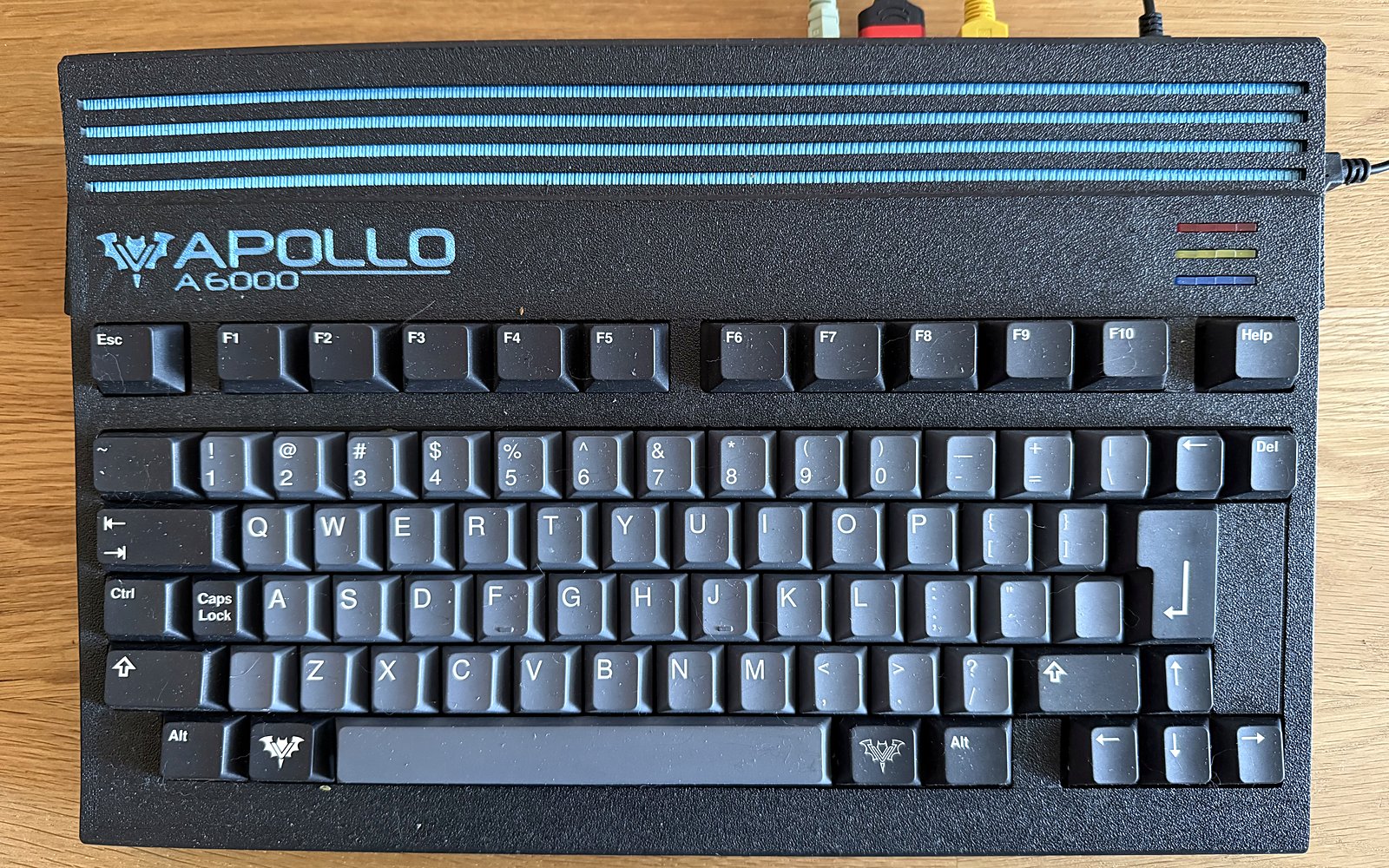
With the A6000, there's now a machine with an MC68080 CPU@100Mhz, 12MB Chip RAM and 2 GB Fast RAM, improved graphics and sound capabilities and support for several Amiga-like OSes (ApolloOS, CoffinOS) or even just plain AmigaOS 3.2.3. Everything inside a beautiful, very Amiga 600-like case with mechanical keyboard. Available in different colors, too :)
So here I am now. Sitting at my kitchen table which I call a lab, writing an article about my excitement for modern retro computers, which bring back the joy in computing for me.
The Good, The Bad And The Not-So-Ugly
The A6000 is not just a re-imagined Amiga, the C64U and the MEGA65 also go beyond what once was. All 3 have modern HDMI ports, networking capabilities (the C64U even has Wi-Fi), USB support and the good old 9-pin joystick ports are still available. All this opens up opportunities for tinkering around and having even more fun.
But there are things I am missing from the old times, which the new machines cannot really bring back for me. Carrying staples of floppy disks over to a friend, having extensive copy parties over the weekend, for example. Being connected to some BBS via acoustic coupler, downloading the freshest Freeware, Shareware and ... stuff like that ;)
Yes, a 1541 floppy drive can be connected to the C64U and the MEGA65 even has a built-in 3,5" floppy drive. Besides the already mentioned technical issues with old drives, like worn out belts, the floppy disks themselves are hard to get and relatively expensive nowadays – if you manage to find some online.
Nevertheless, I see one reason why I would want the real machines. Learning how to repair them and keeping them alive. They deserve the love and it would be a shame, if one day they're gone for good forever. Some of them really are looking ugly after 40 years, so I could at least try to make them shine again.
What about you, do you also prefer the new FPGA machines over the original ones? Or is there just nothing better than the originals? Maybe you still own a fully functional Amiga or C64 and potential repairs never scared you? Leave your opinion in the comments :)
Comments
No comments yet — be the first.